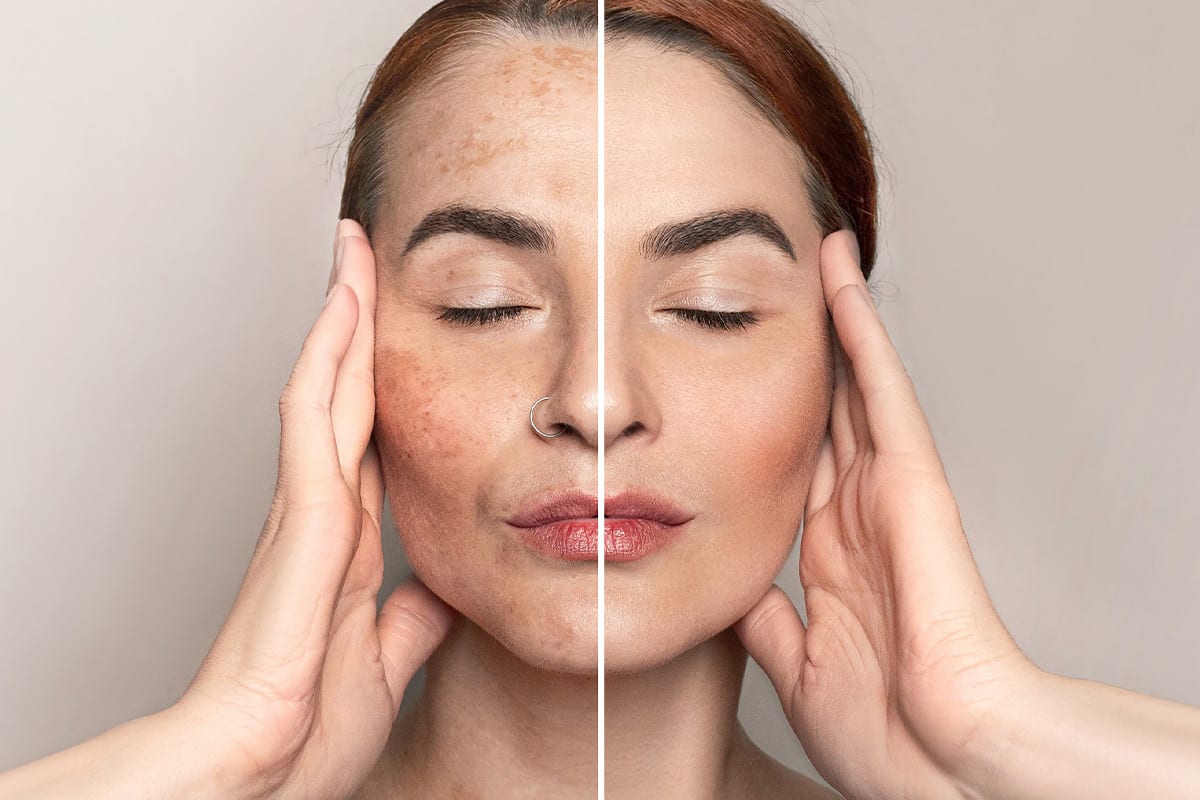
You notice patches of discoloration across your cheeks or forehead, while other areas of your face have brown spots that seem to linger after sun exposure. Although they may seem similar, these changes can have very different causes and often require different treatments.
At Curated Dermatology in Bridgewater, board-certified dermatologist Dr. Tanvi Patel offers advanced expertise in medical and cosmetic dermatology with a personalized approach to skin care. In this article, we explain how melasma differs from dark spots and explore treatment options that may help restore healthier, more radiant skin.
Melasma vs. Dark Spots: What’s the Difference?
While both conditions involve excess pigmentation, their causes, appearance, and treatments differ significantly. A professional evaluation helps identify the source of discoloration so your treatment plan can be thoughtfully curated to your skin’s unique needs.
Cause
Melasma is a chronic pigment disorder triggered by overactive melanocytes, the cells that produce melanin. Hormonal changes, sun exposure, heat, and genetic predisposition commonly contribute to its development. Dark spots, also known as hyperpigmentation or sun spots, typically develop after UV exposure, aging, inflammation, acne, or minor skin injuries.
Appearance
Melasma appears as larger, symmetrical patches of brown or gray-brown pigmentation across both sides of the face, most commonly affecting the cheeks, forehead, upper lip, and chin. Dark spots are generally smaller, more defined, and isolated. They may develop anywhere on the face or body and often vary in size, shape, and intensity.
Treatment Considerations
Melasma requires long-term management because it tends to recur when triggered by sunlight or heat. Dark spots are often more straightforward to treat once the underlying cause has been addressed. In both cases, identifying the type and depth of pigmentation allows your provider to recommend the most appropriate treatment plan.
Treatment Options for Melasma and Dark Spots
Successful treatment often combines several approaches to reduce unwanted pigmentation while protecting your skin from future discoloration. Your provider will recommend therapies based on your skin type, concerns, and aesthetic goals.
Medical-Grade Topical Treatments
Prescription topical medications and carefully selected medical-grade skincare products help regulate melanin, accelerate healthy skin cell turnover, and fade discoloration. Ingredients such as hydroquinone, retinoids, azelaic acid, vitamin C, and brightening agents may be incorporated into a personalized treatment regimen when appropriate.
Chemical Peels
Chemical peels gently exfoliate the outermost layers of the skin, encouraging the removal of pigmented cells while promoting healthier skin renewal. Depending on your skin type and the nature of your pigmentation, a series of customized chemical peels may gradually improve skin tone and enhance the effectiveness of your skincare routine.
Laser and Energy-Based Treatments
Laser technologies may improve certain forms of pigmentation by targeting excess melanin while stimulating skin remodeling. Because melasma can often worsen with inappropriate laser settings, individualized treatment planning is essential. Your provider will determine whether laser treatment is appropriate based on the characteristics of your pigmentation.
Sun Protection and Long-Term Maintenance
Daily broad-spectrum sunscreen remains one of the most important components of treatment for melasma and dark spots. Consistent sun protection helps prevent new pigmentation from forming and reduces the likelihood of recurrence after treatment. Additional measures, including hats, shade, and a personalized skincare routine, help maintain long-term results.
Achieve a Brighter, More Even Complexion
Whether you’re concerned about melasma, sun spots, or another form of pigmentation, an accurate diagnosis is the foundation of effective treatment. At Curated Dermatology, board-certified dermatologist Dr. Tanvi Patel provides comprehensive evaluations and personalized treatment plans to address your unique skin concerns. Schedule a consultation to explore a curated plan that helps you achieve a clearer, more even complexion.