
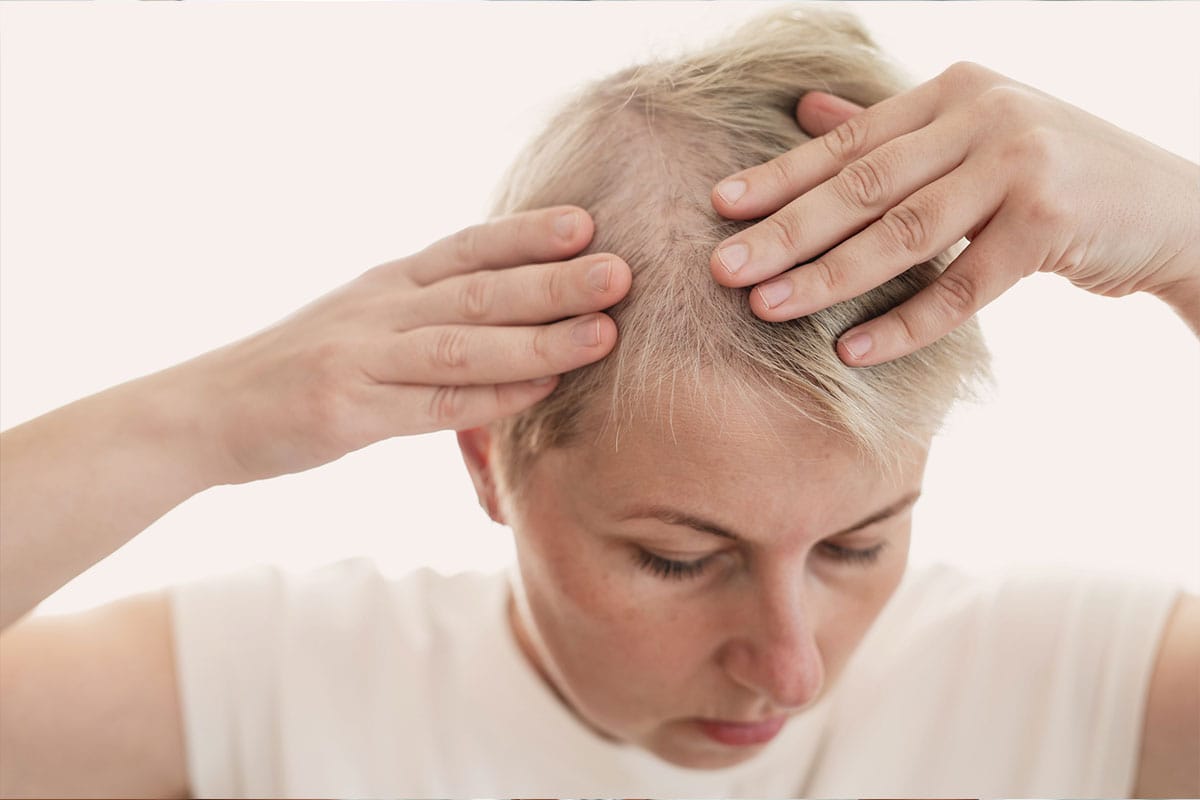
You may first notice a small, smooth patch of hair missing while brushing your hair or looking in the mirror. Over the following days or weeks, additional patches may appear. Hair loss can be unsettling because it affects not only your appearance but also your confidence.
At Curated Dermatology in Bridgewater, NJ, board-certified dermatologist Dr. Tanvi Patel provides thoughtful, personalized care for patients experiencing hair loss. With expertise in medical dermatology and diagnosing complex skin and hair conditions, Dr. Patel determines the underlying cause of your hair loss and recommends treatments tailored to your unique needs and goals.
In this article, we explain what alopecia areata is, its possible causes, and how it’s treated.
What is alopecia areata?
Alopecia areata is an autoimmune condition that causes your immune system to mistakenly attack healthy hair follicles. As a result, hair growth is interrupted, leading to sudden hair loss, most commonly in smooth, round or oval patches on the scalp. In some cases, it may also affect your eyebrows, eyelashes, beard, or other areas of the body.
The condition can develop at any age and varies widely from person to person. Some people experience only a single episode with spontaneous regrowth, while others may have recurrent or more extensive hair loss that requires ongoing management.
What causes alopecia areata?
Although the exact cause of alopecia areata remains unclear, it is believed to result from genetic and immune system factors. People with a personal or family history of autoimmune diseases may have a greater risk of developing the condition.
Certain factors, including physical or emotional stress, illness, or hormonal changes, may trigger an episode in individuals who are predisposed. However, alopecia areata is not contagious, and it is not caused by poor hair care or hygiene.
What are the symptoms of alopecia areata?
Symptoms can vary depending on the extent of the condition but often include:
- Sudden, round or oval patches of hair loss
- Smooth, hairless areas without scarring
- Hair loss affecting the scalp, eyebrows, eyelashes, or beard
- New hair growing back white or finer before returning to its normal color
- Nail pitting, ridges, or other nail changes in some individuals
- Episodes of hair loss followed by periods of regrowth
How is alopecia areata treated?
There is no single treatment that works for everyone, which is why your care should be personalized. Depending on the extent of your hair loss and your health, treatment may include topical or injectable corticosteroids, medications that regulate the immune response, or other therapies that encourage hair regrowth and reduce inflammation.
At Curated Dermatology, we offer PRP hair restoration to appropriate candidates with certain types of hair loss. Platelet-rich plasma (PRP) therapy begins with a small sample of your blood. The blood is processed to concentrate platelets that contain naturally occurring growth factors involved in tissue repair. These concentrated platelets are then carefully injected into targeted areas of your scalp to support healthier hair follicles and encourage hair growth.
Because PRP uses your body’s own biological components, it is a natural solution that can complement a comprehensive hair restoration plan. Most patients benefit from an initial series of 3 to 4 treatments spaced about 4 to 6 weeks apart. After the initial series, maintenance sessions are typically recommended every 6 to 12 months, depending on your response to treatment and the severity of hair loss.
Take the next step toward healthier hair
If you’re noticing unexplained hair loss, it’s a good idea to get it checked sooner rather than later. Early evaluation can help identify the cause and guide the right treatment plan.
At Curated Dermatology in Bridgewater, NJ, board-certified dermatologist Dr. Tanvi Patel takes a personalized, thoughtful approach to help you understand what’s going on. Schedule a consultation to learn about alopecia areata and the best next steps for your hair health.